
Service
Virtual staging
Empty rooms furnished, tired rooms shown renovated, in a European interior language rather than a furniture catalogue. Done by an interior designer, which is usually the difference between a room a buyer believes and a room a buyer scrolls past.
What it is
Furniture that belongs in the room
Virtual staging is furnishing a room inside a photograph, so an empty or dated property can be marketed as a place someone would want to live, without renting any furniture. A photograph of an empty apartment is honest and useless. Most people cannot read a bare room: they cannot tell whether the sofa fits, whether the bedroom takes a double bed, or what the place would feel like to live in. Staging answers that without renting a single piece of furniture.
The work is an interior design decision before it is an image. Furniture at real scale, placed the way the room actually works, with circulation left clear. Light and shadow matched to the window in the photograph, so the shadows fall where the sun was on the day it was taken.
And styled for where the property is. A Swiss or Nordic apartment staged with American catalogue furniture reads as fake to a local buyer in about one second, even if they cannot say why.
Before and after
Drag the handle and check the edges
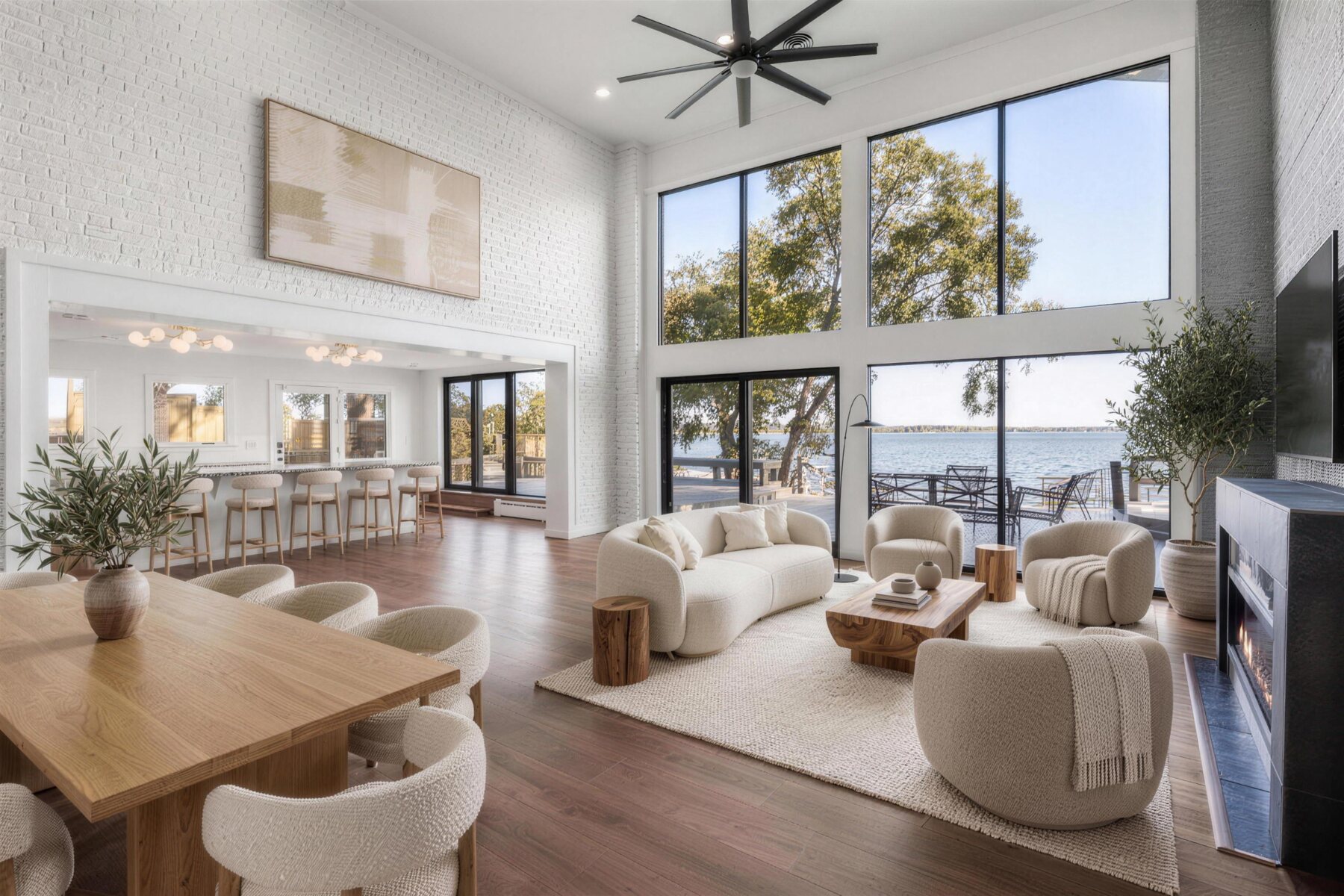
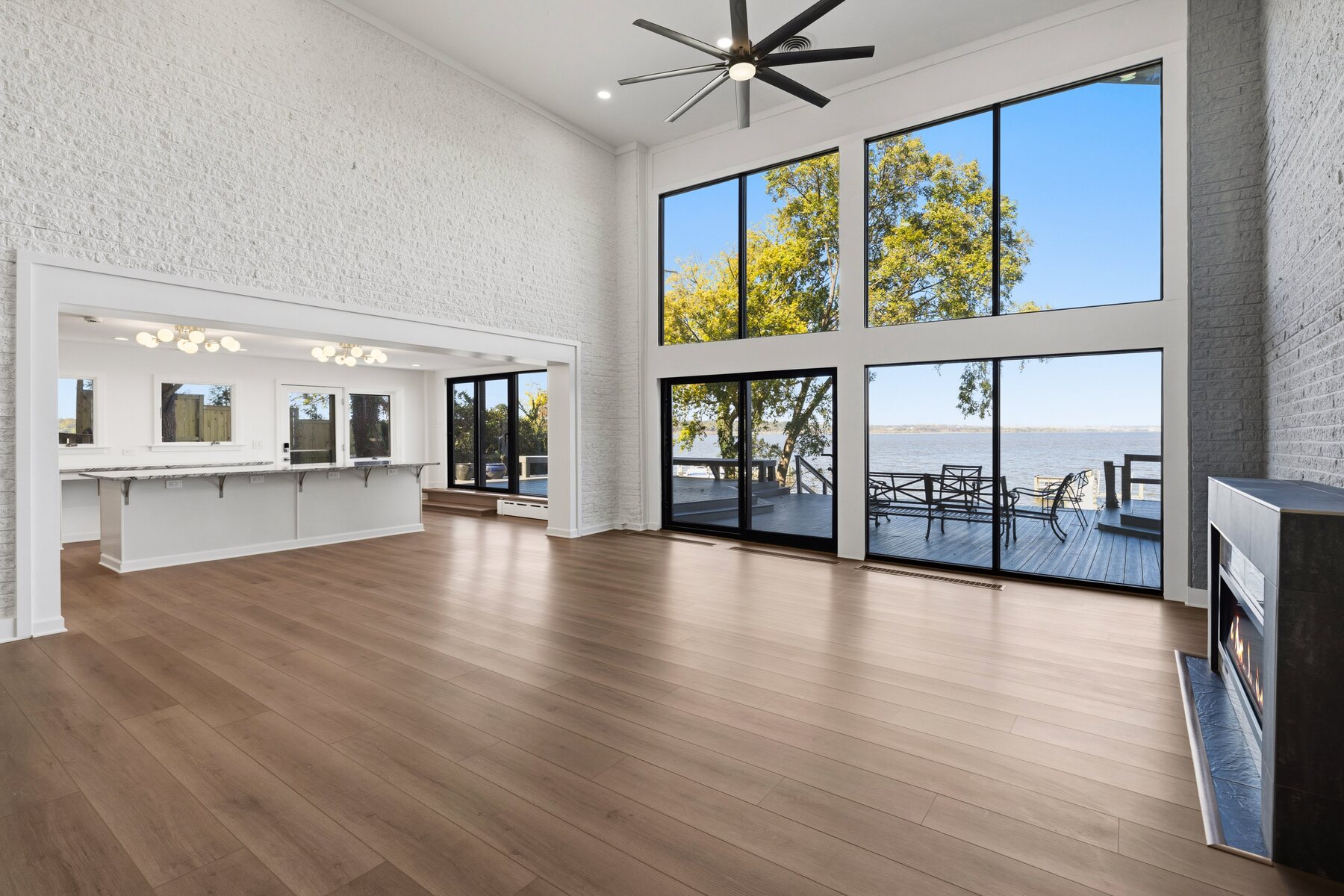
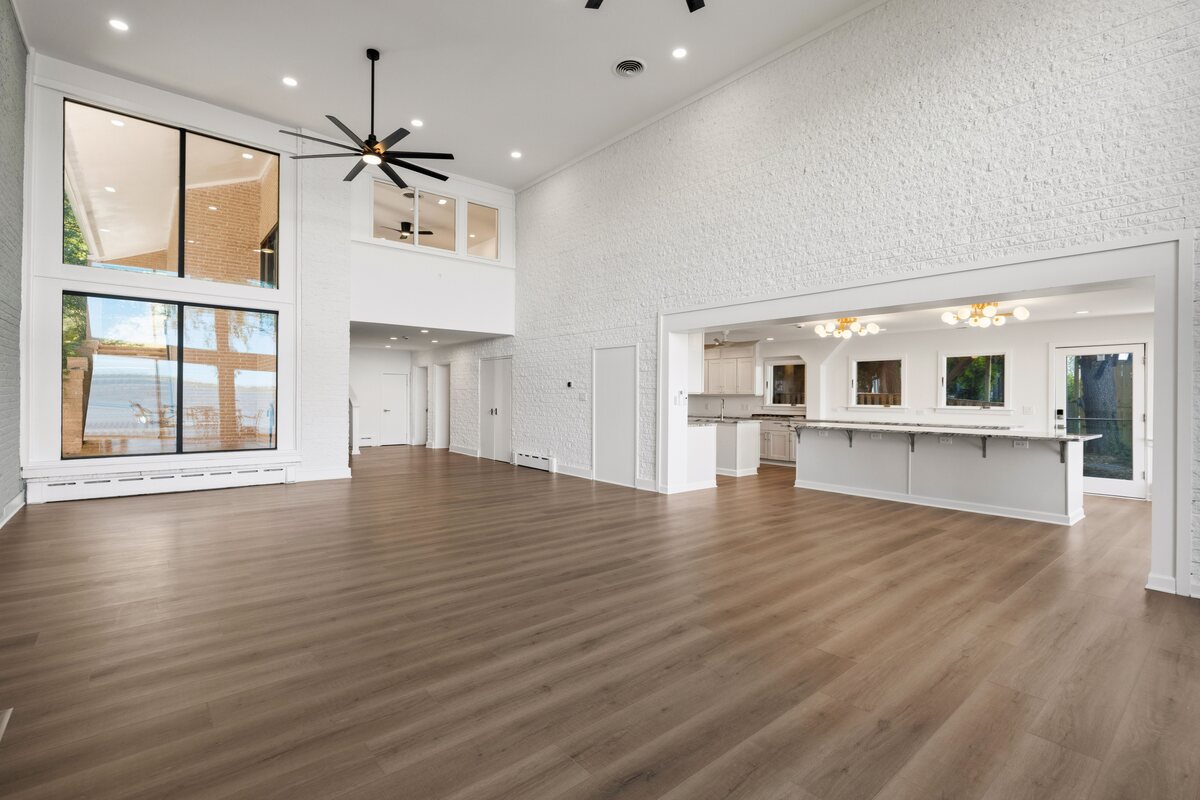
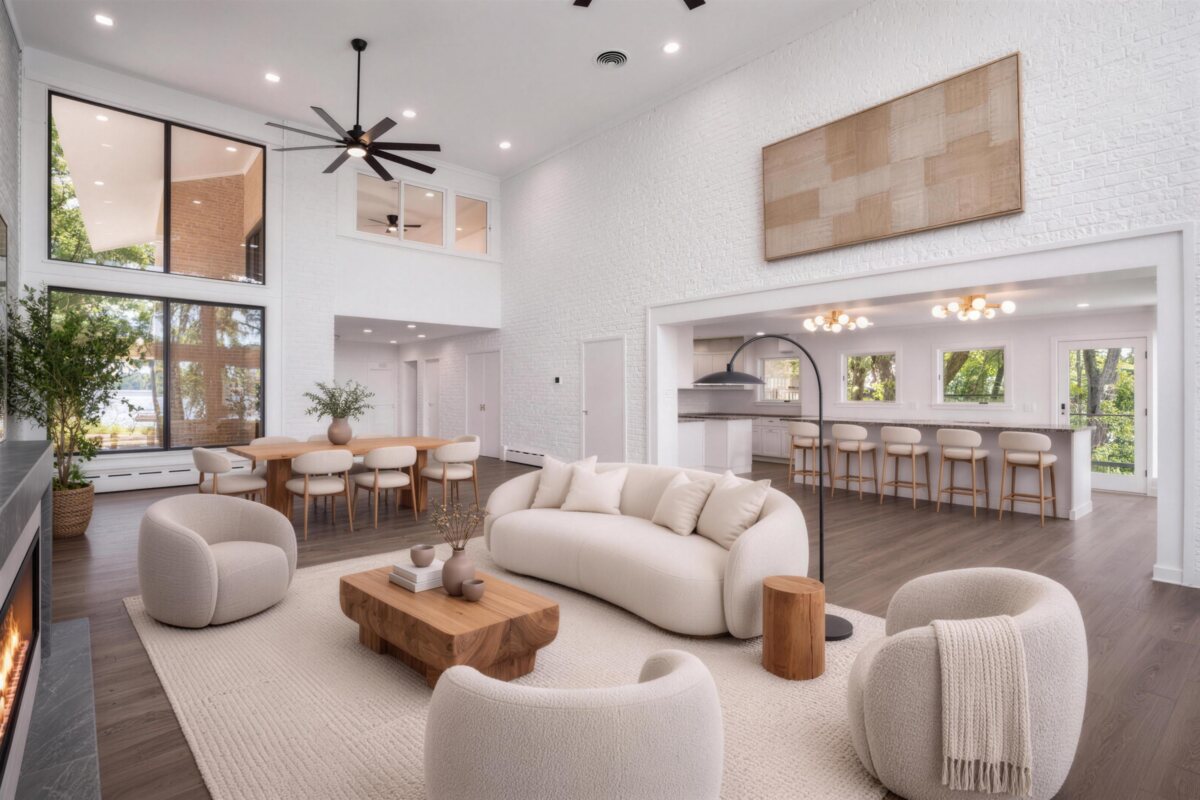
One house, three rooms. Empty photographs on one side, the same frames staged on the other. Nothing was invented: the painted brick, the windows, the fireplace and the view out to the water are the ones that were there on the day.
The first one is a wipe, so you can run it slowly along a sofa leg or a window frame. That is where staging normally falls apart, which is why we would rather you looked.
 BeforeAfter
The main living room. Furniture at real scale, shadows following the light that was already in the photograph, and the lake left exactly as it is.
 Before
 After
The same room from the other end, with the dining area placed so the kitchen bar still reads as part of the plan.
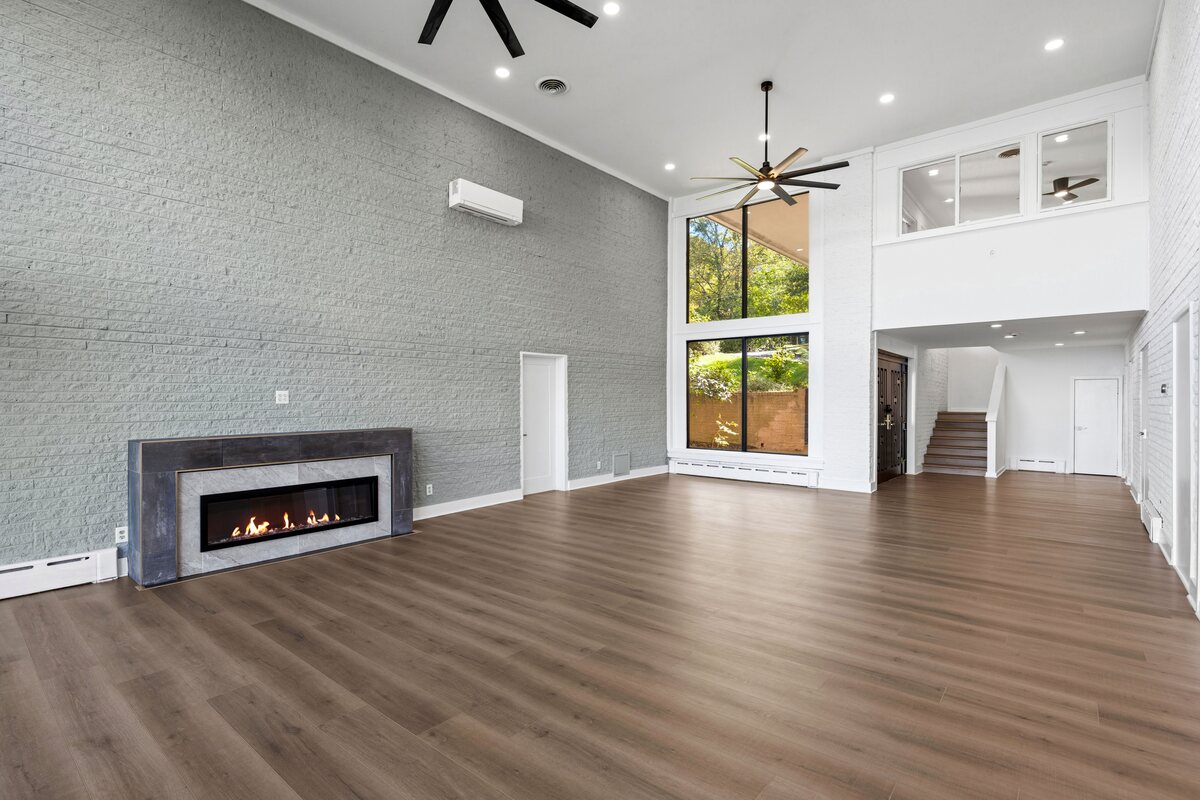 Before
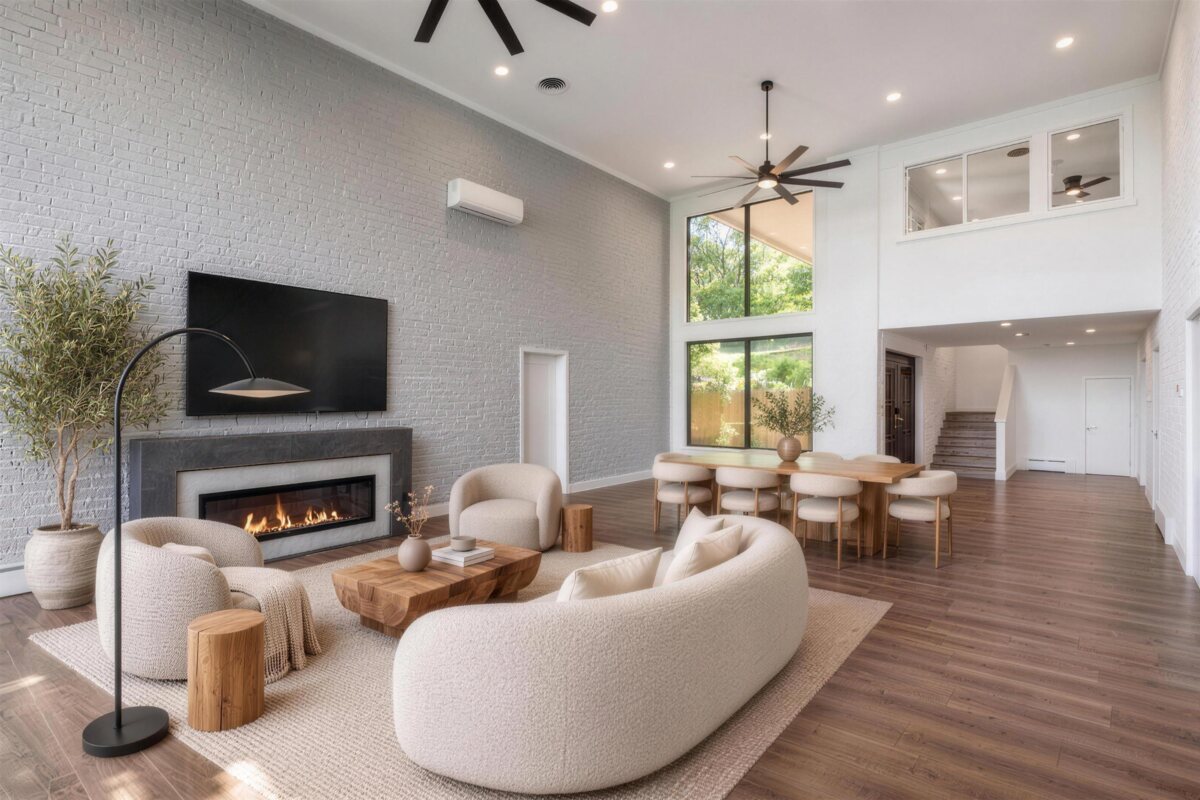 After
The fireplace wall. A long empty wall is the hardest thing to sell and the easiest thing to fix.
What it is used for
Six things we are asked to do
What we work from
Photographs, and a few decisions
Photographs of the rooms, as large as you have them. Straight on rather than tilted, wide enough to see at least two walls, taken with the blinds open. A bad photograph limits the result more than any other single factor.
The room list and what each room is meant to be. A small room that you want read as a nursery and a small room that you want read as a study are furnished differently.
Style direction, or permission to choose. One reference image is enough, and if you have none we propose a direction on the first room and you approve it there.
What has to stay. The view out of the window, the fireplace, the parquet, the original mouldings. Anything the property is actually being sold on should survive the staging, not be decorated over.
How the work runs
One room first, then the rest
Price
Per set, and it drops with volume
Send the photographs and the room list, and you get a figure rather than a range. Agencies with a steady flow get a standing rate.
What the number depends on
How many rooms. The style is decided once, so a full apartment costs considerably less per image than a single room.What has to come out first. Furnishing an empty room is quick. Removing an existing kitchen, a wall of shelving or a patterned carpet is the slow part.Furnishing or renovating. Adding furniture is staging. Changing finishes, cabinetry or layout is design work and is priced as design work.Quality of the photographs. Sharp, level, well lit images are fast. Dark, tilted or wide angle distorted ones have to be corrected first.How many style versions of the same room you want.
Questions
Before you write
If something is not here, ask it in the brief and we will answer in the reply.
Do staged photos have to be disclosed?
In most places yes, and the rules have tightened. A number of listing services and portals now require images to be marked when they are virtually staged or otherwise altered, and the agent carries the risk if they are not. We deliver a labelled set alongside the clean one so you can meet whatever your market requires. Check your own portal’s current wording, because it changes.
Can you remove the furniture that is already there?
Yes. The room is emptied first and then furnished again. It takes longer than staging a bare room, which is why it is priced separately.
Will it look real?
That is the entire job. Furniture at true size, perspective matched to the camera, shadows that agree with the light in the photograph. If a room cannot be made to look right, usually because of the photograph, we say so rather than deliver something that will be spotted.
Can you keep the real view from the window?
Yes, and you should want that. The view is often the most valuable thing in the photograph, and replacing it with a nicer invented one is the fastest way to lose a buyer’s trust at the viewing.
What styles do you work in?
European and Nordic interiors are the natural ground here, because that is what the studio designs and renders every week. If you need a different market’s language, send one reference and we will match it or tell you honestly that it is not our strength.
Can we send a test before committing?
Yes, and most clients do. One room, paid, judged on your own photograph. It is the only reliable way to know whether the result suits your listings.
Next
Send the photographs and get a price
Tell us how many rooms, what style you are after and when you need them. We reply with a price and a timeline within one business day.